Faq
What is the difference between Archway Support and Archway Outreach?
Both Archway businesses offer professional counseling and neurotherapy practice for adults, children and families with a wide range of issues, including anxiety, depression, learning disorders and other life adjustment and health issues. They both offer the same unique variety of neurotherapy systems and techniques. Archway Outreach is a nonprofit organization that offers discounted session fees for families that demonstrate financial need based on family income, family size and number of therapies/ modalities of the client. See our Archway Outreach page for details on donating and ask a therapist for an application for funding.
What is biofeedback?
Biofeedback is a process that enables an individual to learn how to change physiological activity for the purposes of improving health and performance. Precise instruments measure physiological activity such as brainwaves, heart function, breathing, muscle activity, and skin temperature. These instruments rapidly and accurately “feedback” information to the user. The presentation of this information — often in conjunction with changes in thinking, emotions, and behavior — supports desired physiological changes. Over time, these changes can endure without continued use of an instrument. This definition was ratified by the Task Force on Nomenclature in 2008.
What is Neurofeedback/Neurotherapy?
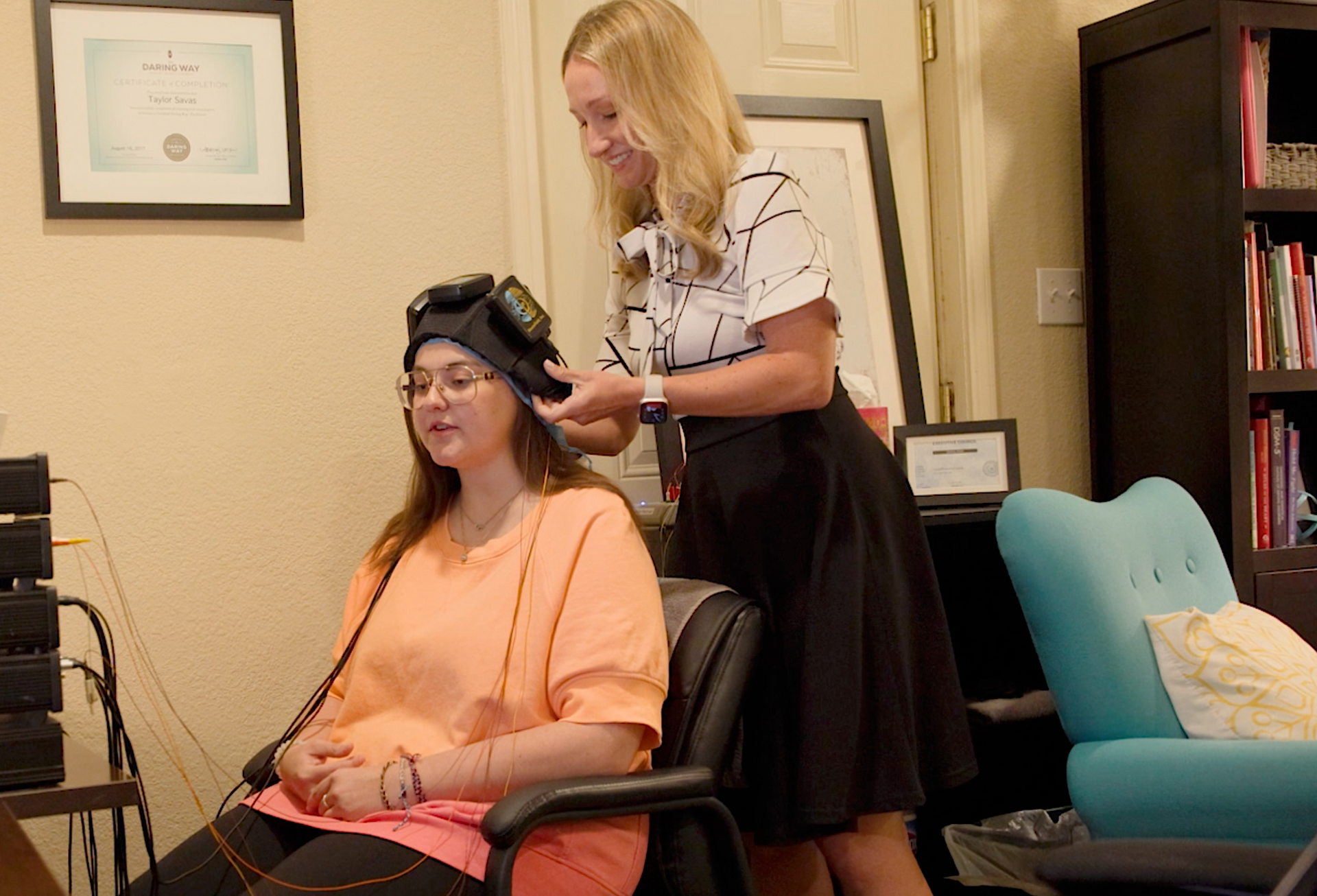
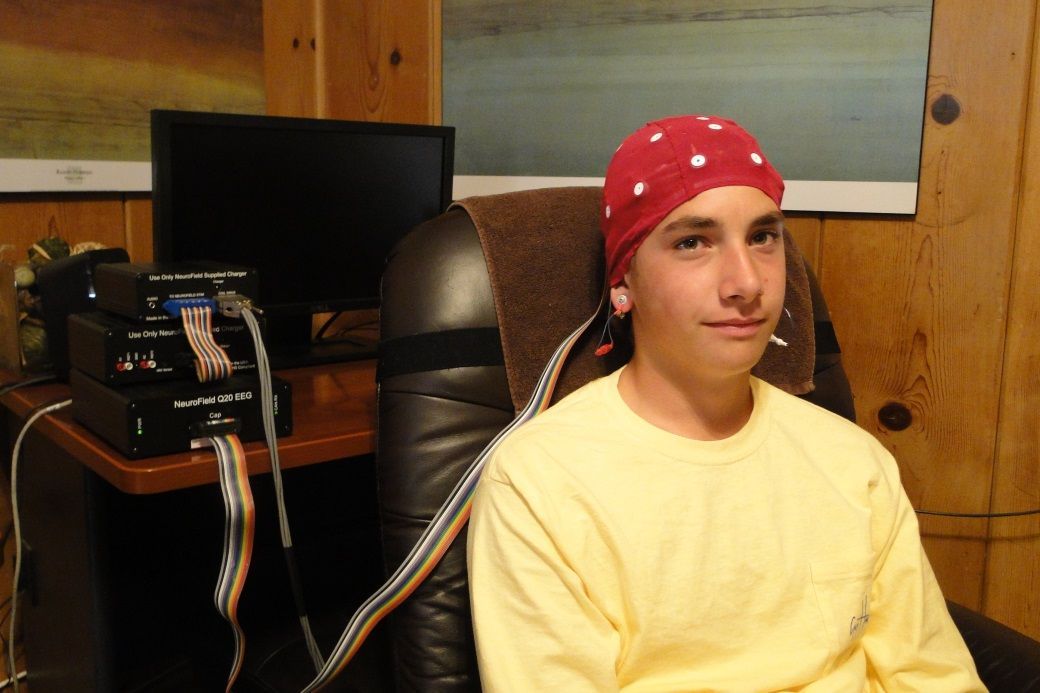
Like other forms of biofeedback, Neurofeedback training (NFT) uses monitoring devices to provide moment-to-moment information to an individual on the state of their physiological functioning. The characteristic that distinguishes NFT from other biofeedback is a focus on the central nervous system and the brain. During training, sensors are placed on the scalp and then connected to sensitive electronics and computer software that detect, amplify, and record specific brain activity, commonly called the EEG or electroencephalogram. Unlike traditional neurofeedback, a combination of neuromodulation tools are use to change brain behavior.
NFT does not involve either surgery or medication and is neither painful nor embarrassing. When provided by a licensed healthcare professional with appropriate training, generally trainees do not experience negative side-effects. For more details, see our Neurotherapy page.
What symptoms can be addressed with Neurofeedback?
A partial lists includes:
- Anxiety
- ADHD – hyperactive/inattentive/combination
- Autism, Aspergers, and Developmental Delay
- Depression or mood disorders
- Explosiveness and Irritability
- Head Injury/ TBI
- Insomnia and sleep issues
- Learning disorders, like dyslexia
- Migraines/ headaches
- Chronic Pain
- Substance Abuse
- Sensory Integration Issues
- Trauma
Many websites have the research studies available, www.ISNR.org, www.AAPB.org, www.ochslabsinc.com and www.eeginfo.org.
What is a quantitative Electrocephalogram (QEEG)?
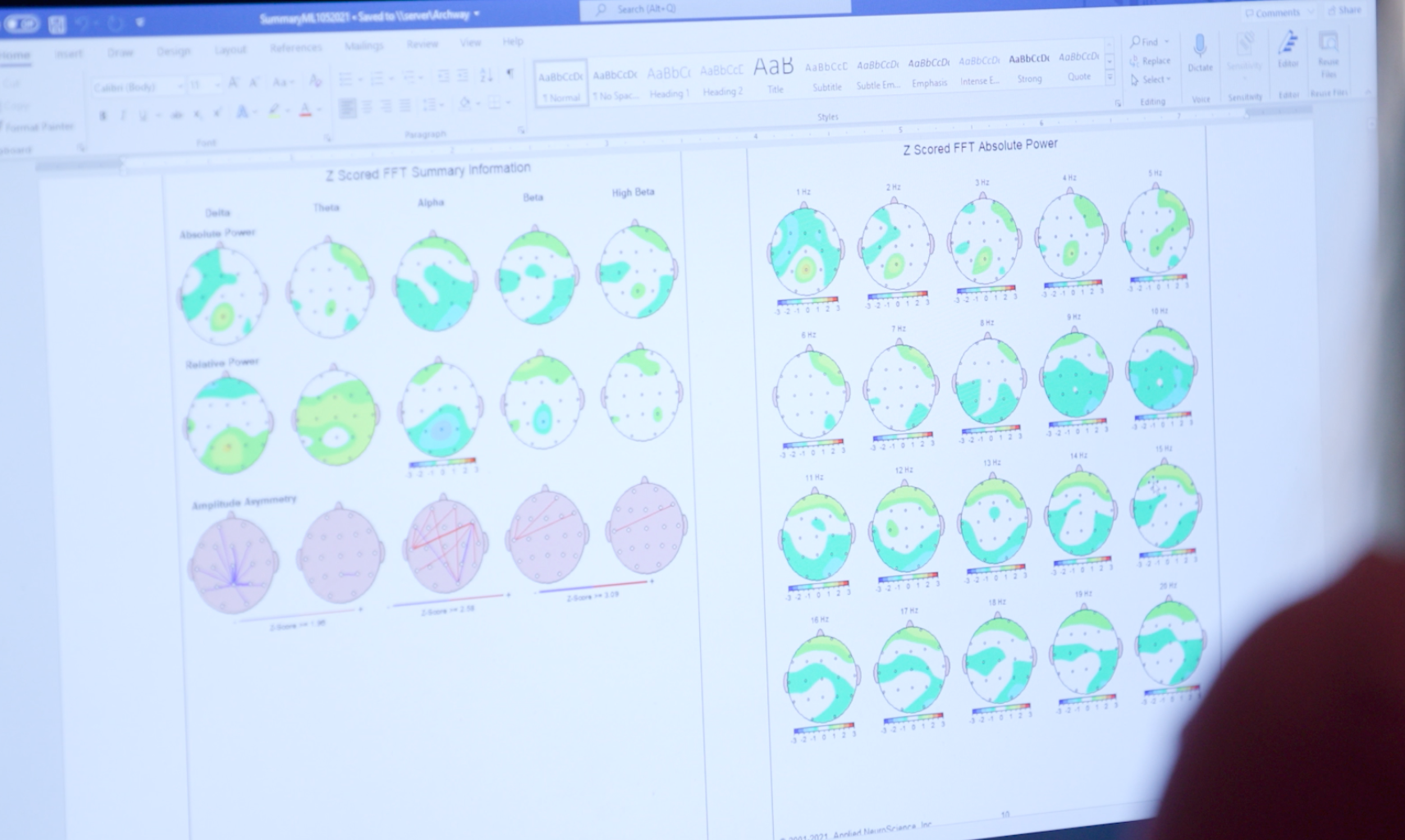
It is a tool that is designed to help link symptoms and behavior to functional networks in the brain. EEG neuro-imaging is used to evaluate Desikan-Killiany, Brodmann Areas, and nodes and connections of functional networks in the brain likely linked to symptoms, statically or in real-time. The data for this analysis is collected through a capping system that is placed on the head or by carefully applying 19 sensors to the scalp in the traditional 10-20 pattern. Archway uses the NeuroField technology for this data collection, analysis and application of neurotherapy for most clients. The AI reports generated help to guide the course of training and demonstrate the energy patterns within the client.
What is NeuroField?
NeuroField is the inventor and supplier of several neuromodulation devices. The notion that low intensity electromagnetic stimulation could be of clinical value was one of the driving forces behind the development of the NeuroField technology. Neuromodulation, at the clinical level, is comprised of transcranial alternating current stimulation (tACS), transcranial direct current stimulation (tDCS), transcranial random noise stimulation (tRNS) and pulsed electro-magnetic field stimulation (PEMF). These various modalities are used in customized and nuanced ways to aid our clients’ brain and body function based on the data collected in the qEEG mapping process. Each method has a different method of delivery and a specific purpose in changing the body. Information about Neurofield and Dr. Nicholas Dogris can be found at www.neurofield.org.
What is Loreta Z-Score Neurofeedback?
LORETA refers to LOw Resolution Electromagnetic Tomography Analysis. This is a kind of QEEG analysis that provides an estimation of the location of the underlying brainwave generators (e.g., the anterior cingulate, insula, fusiform gyrus) within a frequency bandwidth. It requires the application of an entire electrode cap that must be applied in every session. Z-Score neurofeedback refers the statistical value of “Z” that is the norm, or average, of a standard distribution curve. The goal of training is to help move clients’ energy patterns toward a targeted norm (Z-Score = 0) based on a normative database of high functioning, healthy individuals. Z-Score training can included a range of frequencies from 1-30 Hz and a number of channels/sites from 2 to 19, depending on the needs of the client. LORETA Z-Score neurofeedback gathers the knowledge and analysis and methods of the Loreta and surface data and has been found to provide faster, more significant change in clients functioning through 4 ©2016 the training of brain networks. These brain networks underlie the operation of the various biological systems and, when identified as being dysfunctional, can be targeted through the protocol design to bring those systems back “on line”.
Information about Loreta Z-Score and Dr. Robert Thatcher can be found at www.appliedneuroscience.com
What is LENSware Neurotherapy?
LENSware or LENS, low energy neurofeedback system, uses the same type of sensors and EEG amplifier used in traditional neurofeedback. In traditional neurofeedback, the feedback is presented in tones, visual displays, simple games or DVD feedback in a client-involved, operant-conditioning fashion. In LENS, the feedback is a very low power electrical signal, approximately 10 million times weaker than the earth’s magnetic field. The feedback travels down the same wires carrying the brain waves to the amplifier and computer. Although the feedback signal is weak, it produces a measurable change in the brainwaves without conscious effort from the individual receiving the feedback. The LENS software allows the EEG signals that are recorded at the scalp to control the feedback. The feedback signal is at a frequency that is different from, but correlates with, the dominant brainwave frequency. When exposed to this feedback frequency, the EEG amplitude distribution changes. The result is a changed brainwave state, and much greater ability for the brain to regulate itself. LENS is a whole head approach, whereby there is a process of rapidly assessing all 21 10-20 sites to help identify the optimal training process. Depending upon a person’s sensitivity and hardiness any number of sites are trained in a session. Training sessions may only take approximately fifteen minutes dependent upon the number of sites selected.
Information about LENS and Dr. Len Ochs can be seen at www.ochslabs.com and in The Healing Power of Neurofeedback (2006) by Steve Larsen, Ph.D
What Does a Session Involve?
A session involves personal attention by one of our therapists. The NFT involves an evaluation of the client’s symptoms and then application of some type of device to the head and ears and/or the body; various types of pastes and gels are applied to the equipment, then placed on the body to provide energy conduction from the body, through the amplifier and into the computer systems. As described above, the therapy is painless and usually takes about 30-45 minutes.
Are there side effects?
No, there are no recorded instances of these systems causing harm. The energies you are exposed in therapy are thousands of times weaker than energies you are exposed to every day from cell phones, remote phones in your home, or radio, TV and microwave transmission towers. In over 50 years of research and many trials, neurotherapy has proved itself to be successful without the harmful side effects of medication. Some clients experienced a feeling of tiredness or excessive energy or irritability within 24 hours of therapy, much like any type of exercise..
How many times a week do I or my child need to attend the clinic?
Most people visit our clinic once or twice a week. Some cases may require daily or bi-daily visits in an intensive style therapy. Because we work on an individual basis (one clinician with one client) each person’s session may involve more than one method or approach per session. More sessions do not necessarily mean faster improvements. Each client changes at their own rate.
How many sessions will I or my child need?
Most people will be training between 10 to 40 sessions. The effectiveness of the therapy will depend on the client’s issues, the intensity of the issue, the health of the individual, their sensitivity, reactivity and hardiness and the systems used. All clients will be mapped using either the QEEG or the LENSware system. In an effort to offer the most advanced program possible, we may determine that a more intense assessment of the client is necessary. We use the latest and most precise assessment technology available today, such as the QEEG brain assessment mapping system, as well as other assessment tools and questionnaires. These analyses give us a scientific and precise workup of the client. From this information we prepare a training plan unique to each person. We meet with the client (or the child’s parents) regularly to discuss you or your child’s progress.
Can clients talk during neurotherapy?
Yes, most clients visiting ARCHWAY are also in the need of psychotherapy or counseling. When using the LENSware and Neurofield systems, the clients are free to engage with the therapist without interruption from the neurofeedback. Z-Score and Loreta Z-Score neurofeedback, however, do require focus on the feedback output. In these cases, time is set aside either before or after to discuss whatever the client chooses to bring to therapy and to check-in with the client’s history.
If Qeeg and Neurotherapy are so good, why aren't more clinicians using them?
Most psychologists and physicians simply have not been educated in the clinical applications of EEG biofeedback and are unaware of the existing research and clinical literature, in spite of the fact that the applications to anxiety, epilepsy, and ADD date back to the 1970’s. Furthermore, the instrumentation is expensive and requires serious study and training to use competently. An estimated 2,000 clinicians are using Neurotherapy and QEEG in the USA. At Archway, we find board certification and regular training important to continue to offer clients the latest, most advanced tools and techniques by qualified, licensed professionals.
How do I know which facility to contact?
Archway has one central phone number (432) 682-2724. All calls are managed and assigned to the appropriate professional. If you are specifically interested in certain types of therapy, a certain therapist, fee applications or other important information regarding your situation, please include those details and questions in the message you leave for us. Because every client is important to us and we want to help you achieve the best therapy outcome, the more information you can provide to us, the better we will be able to match you with the professional that fits your needs. Please see our About page for information on our therapists and the Contact page for ways to get in touch.
How do I set up an appointment?
Please browse the website and see which therapist you are interested in working with. Then get in touch to discuss your options or schedule a consultation if you would like more information. If you reach our voice messaging system, please leave a message and we will return your call at our earliest convenience.
Contact us at: 432-682-2724
Archway Support:
1005 W. Texas Ave.
Midland, Texas 79701
Archway Outreach:
114 N. Midkiff Rd.
Midland, Texas 79701